God’s Word is the main way he shepherds his people. And so, Bible reading is essential for discipleship.
But busy lives make it hard to build a consistent habit of time in the Word.
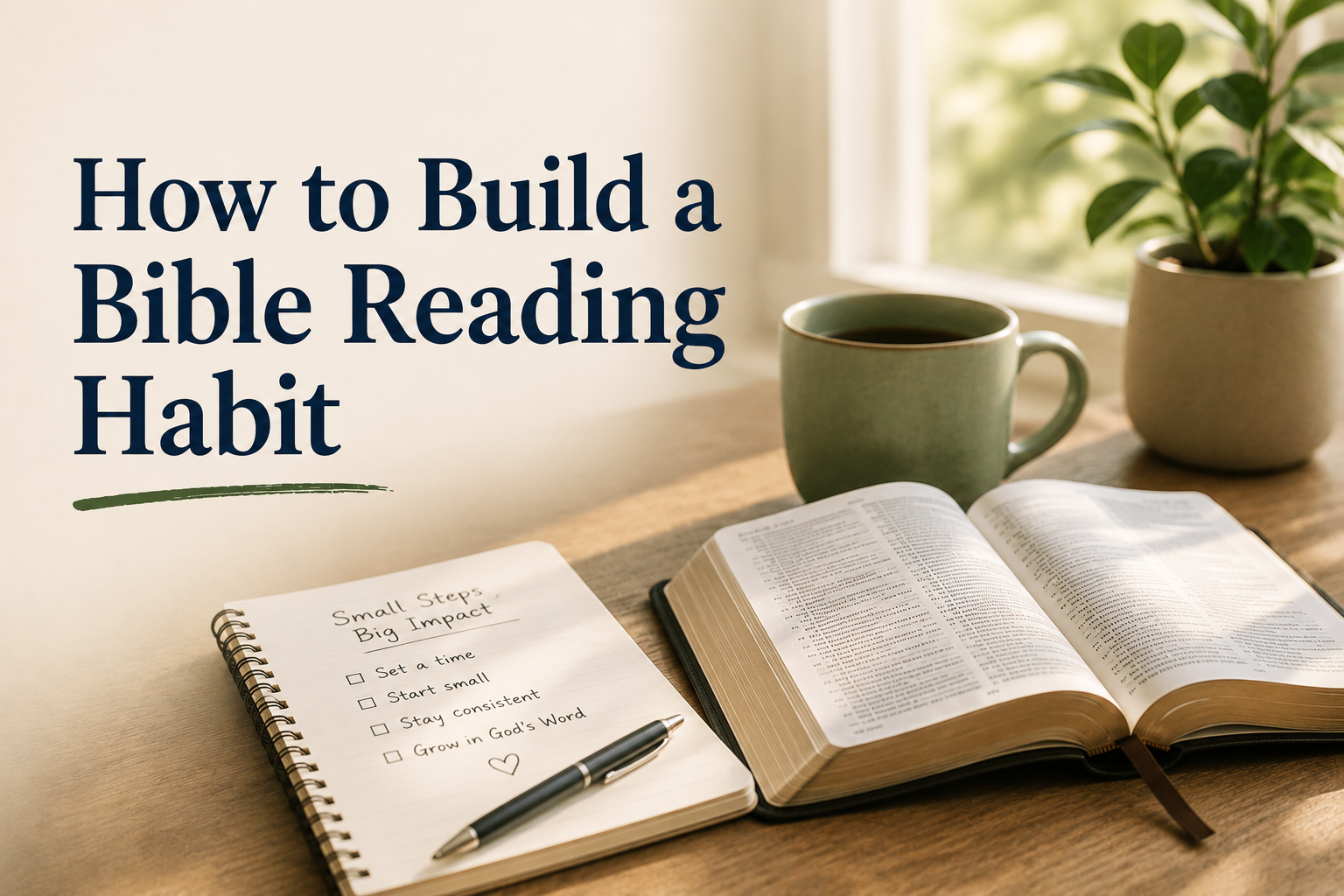
In this post, we explore six practical principles for creating a meaningful and consistent Bible-reading habit.
1. There is not only one correct way
Scripture does not prescribe one way to read the Bible. Seeing a certain method modeled can make us think it’s the only way.
I once thought not reading my Bible 15-20 minutes daily meant failing as a disciple. This is a good pattern for some, but it’s not the only way.
If that were the only way, Christians throughout church history could not meet the standard. In the early church, only the wealthiest and most learned people could read. Of course, we should use our modern access to Scripture. I mention this to emphasize that there is not a single correct way.
This realization frees us to focus on what matters: feeding on and being shaped by God’s Word, not just checking a box.
2. Have a plan
Knowing when and where you will act helps you follow through. To build any habit, make a plan.
Also, knowing what to read reduces the effort of deciding in the moment.
You might start by reading through a shorter book of the Bible while you work on developing the habit. Or you might try a Bible reading plan.
There are many helpful Bible reading plans and resources. I have found the plans here helpful. The Bible App also offers plans for reading through the Bible or studying specific topics.
3. Make sure your plan works for you
This may seem obvious, but in my experience, it often determines success or failure.
Many find mornings ideal because they set the day’s tone. If your mornings are unpredictable—for example, if you have a small child—choose a different, more consistent time. Schedule Bible reading when your routine is most stable.
If your schedule is unpredictable, try weaving Bible reading throughout the day. At times, I have found listening to the Bible during a commute is a great way to do this. You can also meditate on short passages or verses throughout your day.
4. Focus on consistency
Your plan should fit your life. Bible reading feeds us spiritually, as food does physically. Healthy growth comes from consistently eating well, not from one heroic-sized meal.
Plus, repeatedly lapsing and restarting can discourage any Bible-reading habit.
Thus, it is far better to do a small amount consistently than a large amount in irregular bursts. Once a small habit is established, adding more will be much easier.
5. Vary your reading
A. Read different parts of Scripture
In Acts 20:27, Paul refers to the “whole counsel of God”. This is a helpful phrase for thinking about the full breadth of Scripture.
Paul teaches in 2 Timothy 3:16 that all Scripture is inspired by God and useful for growth. And so, we should strive to read all parts of Scripture.
Practically, this means planning to read from both the Old and New Testaments. It is useful to have a system for reading each book and to vary your reading from different parts of Scripture.
B. Read in different ways
You can also read at different levels of depth. Sometimes it helps to read quickly to see the big picture. Other times, you may want to slow down and deeply study or meditate on a passage.
6. Include others
There are many ways to invite others into daily Bible reading. Ask someone to keep you accountable, do the same plan with a friend, or regularly share what you are learning from Scripture.
Community brings accountability and Word-centered fellowship. Including others helps you and your community grow as disciples.
Conclusion
Take the next step: choose a plan and commit to daily engagement with God’s Word. Build this consistent habit and allow the whole counsel of God to shape your life for months and years.
Don’t miss my next post, where I’ll share practical tips for getting the most out of your time in the Word.
How to Maximize Your Bible Reading
God’s Word is the primary means of grace God ordinarily uses to bring remarkable life…
The Life-Changing Power of Scripture
We live in a uniquely loud time period. So many voices vie for our attention,…
Rhythms for Spiritual Growth
Do you want to grow as a disciple of Christ but feel unsure how to…